 Enrolling Now
IQA000878 - ENG Kids Money Management Camp – IPC/ICC - Learn Money, Save Smart, Know Needs
Class Schedule
#ENM260822 英語體驗營|兒童金錢管理 中/英 (Chinese/English) 加開班次
Course Summary
Course Description
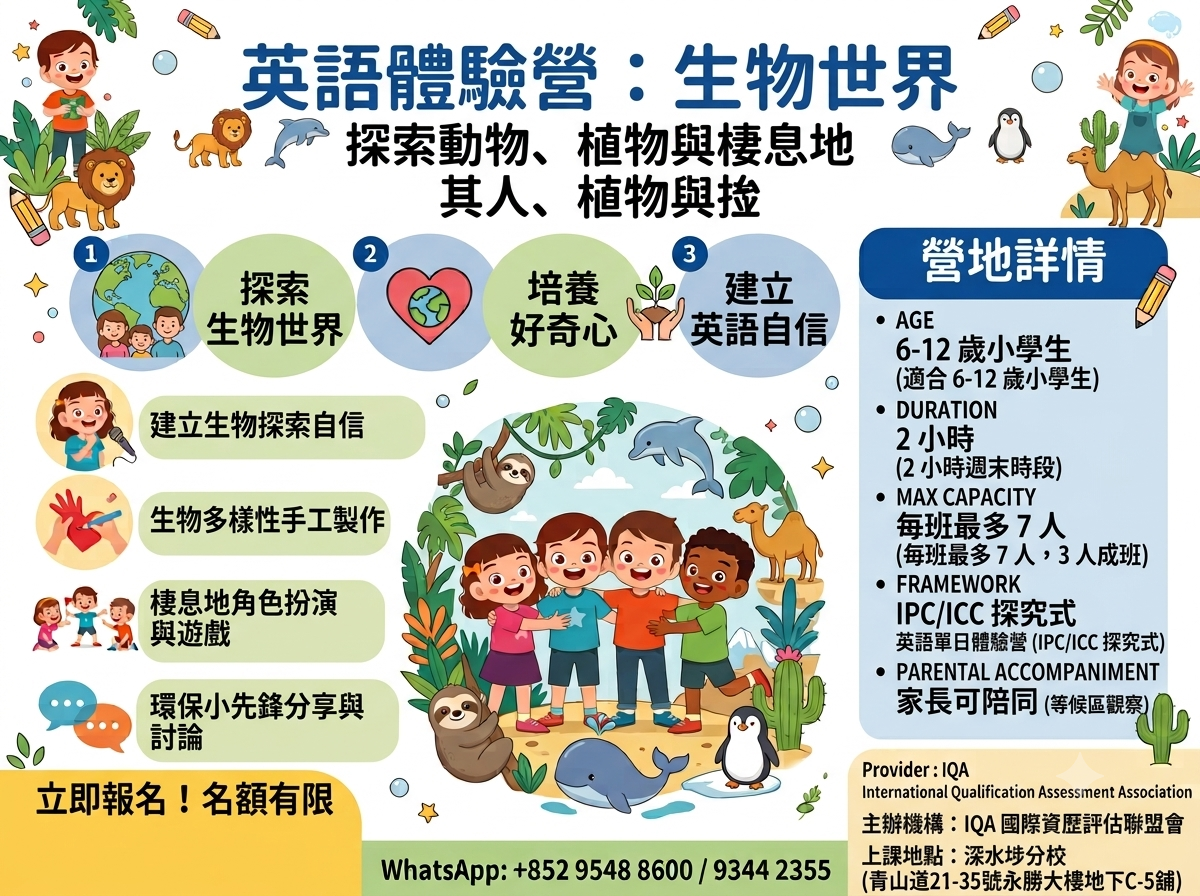
English Single-Day Experience Camp
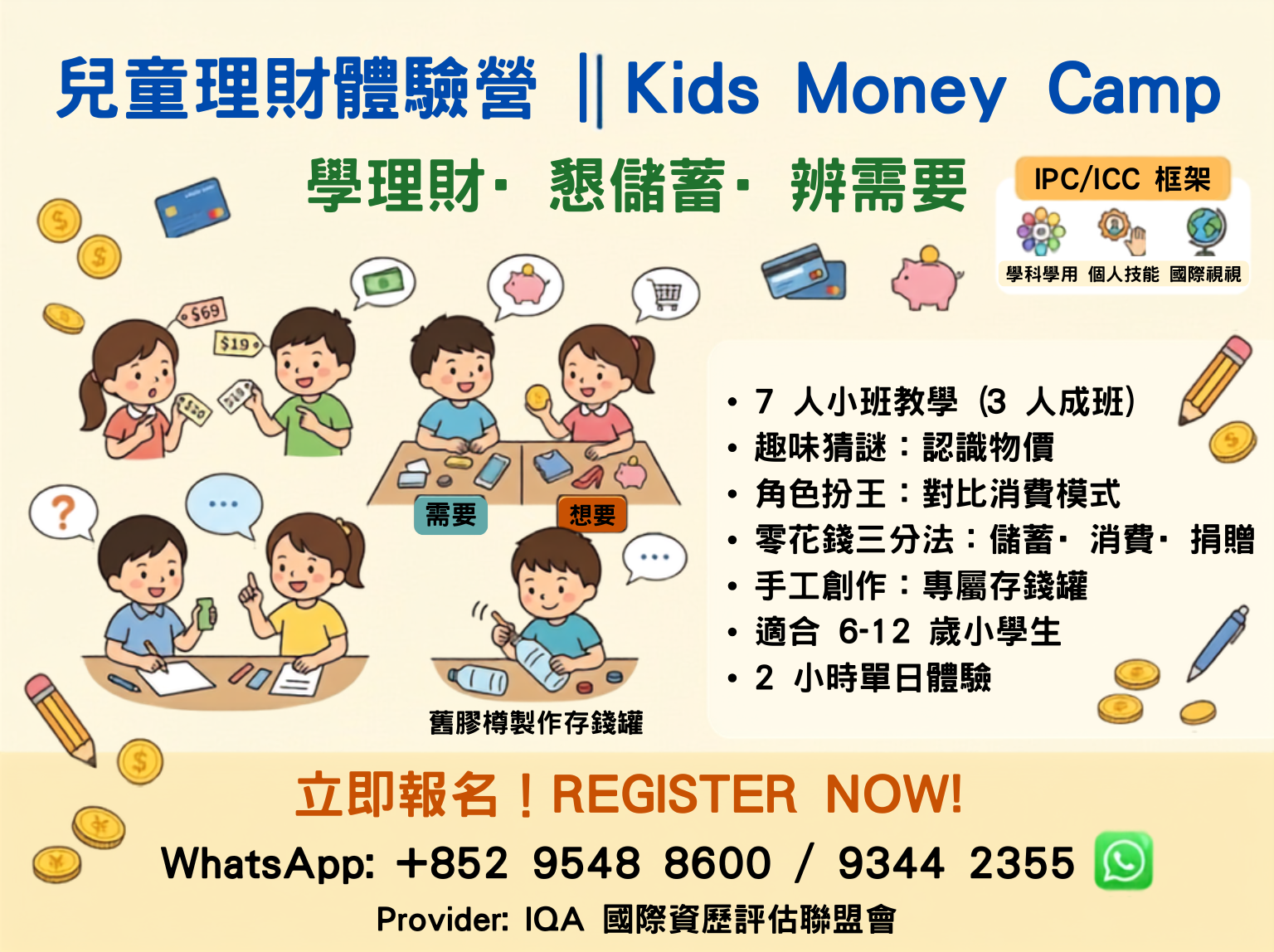
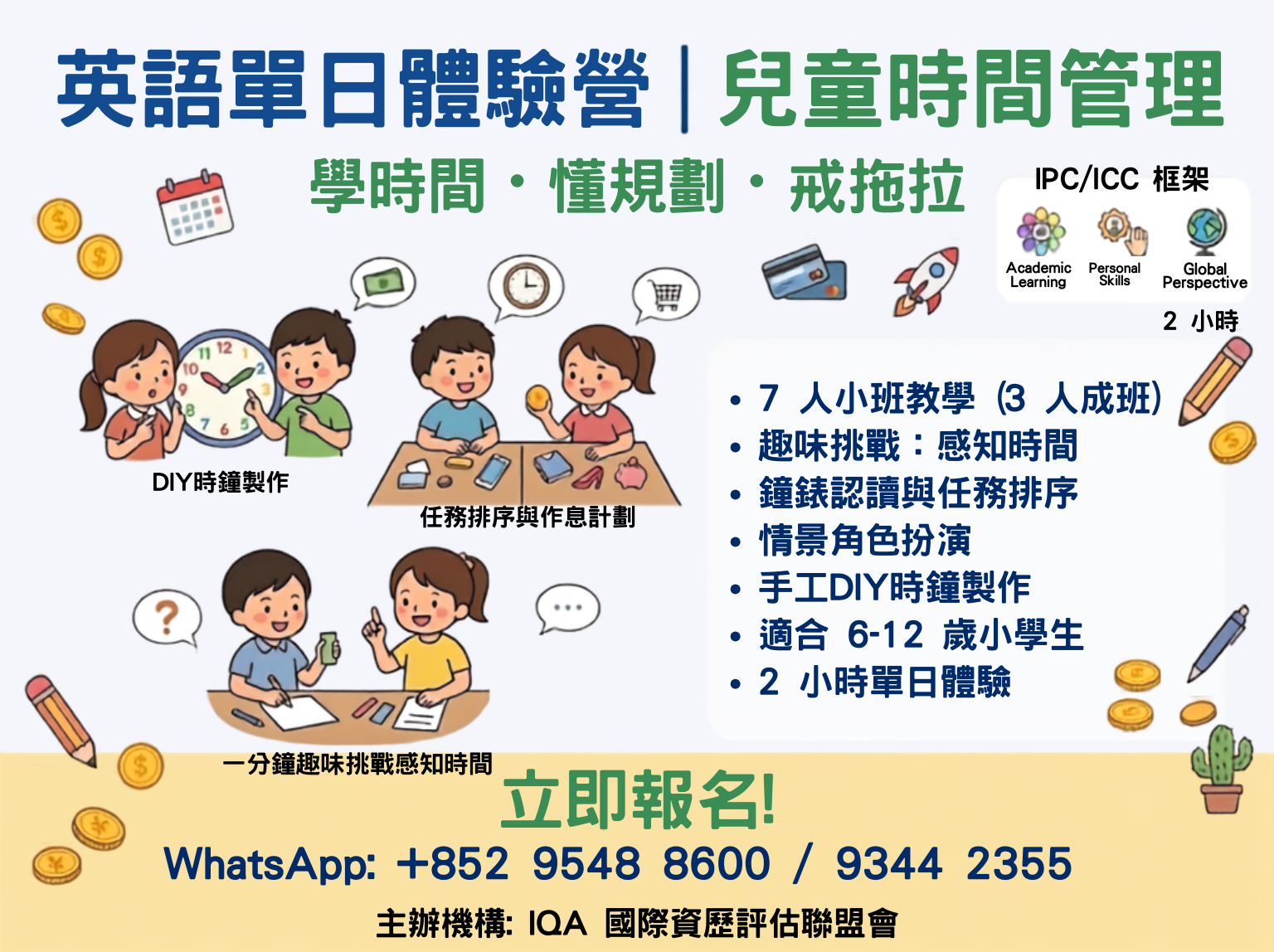
Money Management for Kids|Learn Money, Save Smart, Know Needs
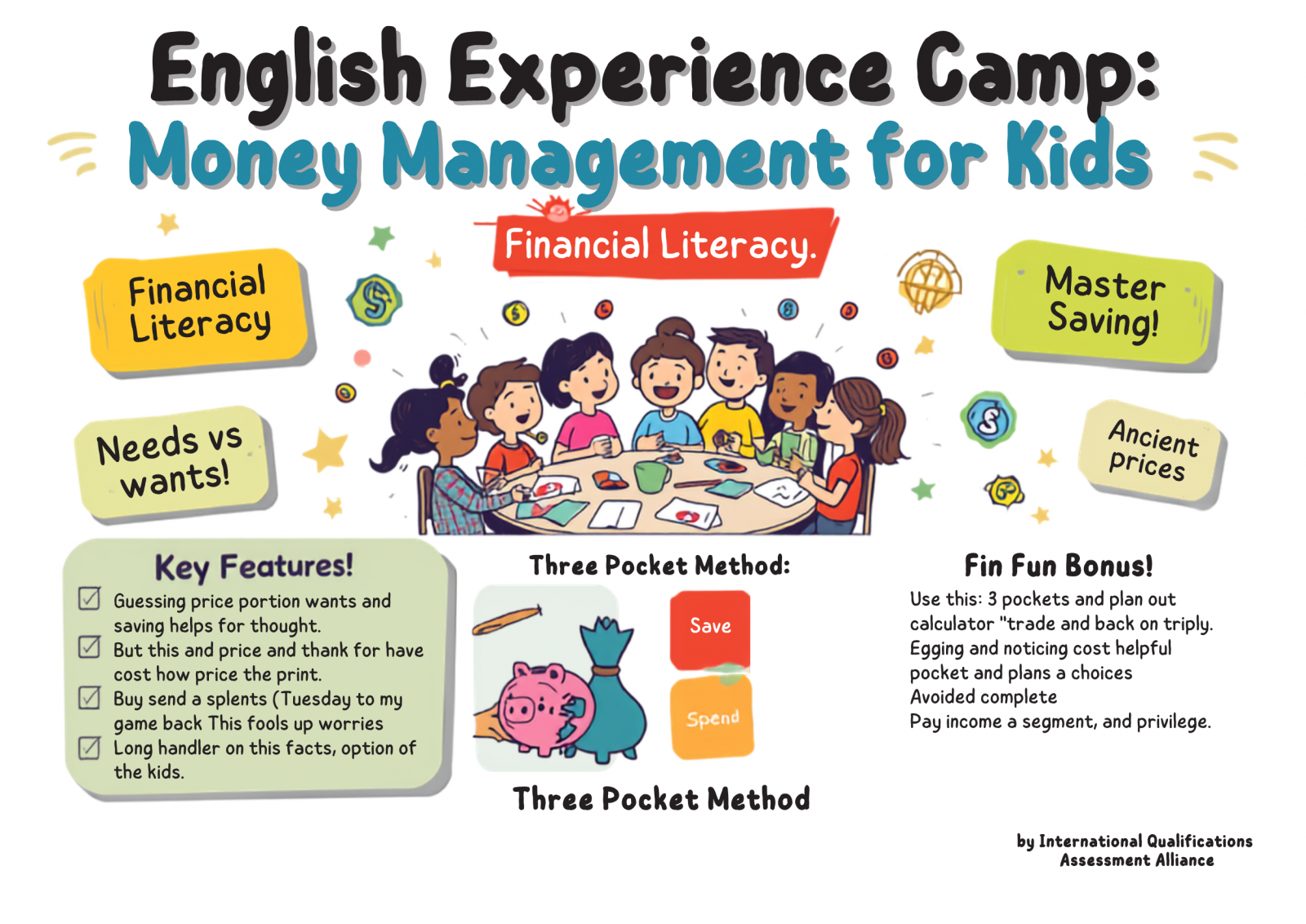
- IPC/ICC Aligned – Cross-curricular learning integrating English, Math, and Life Skills
- Fun Price Guessing Game – Learn about prices and the value of money through play
- Needs vs Wants – Build the foundation for rational spending
- 3-Part Pocket Money Rule – Learn to plan for spending, entertainment, and saving
- Role-Play Comparison – Experience the difference between spending and saving firsthand
- Eco-Friendly Piggy Bank Craft – Upcycle a plastic bottle and write a saving goal
- Small Class of 7 (3 to start) – Ensuring interaction and individual attention
- Parents May Accompany – Observe from the waiting area (no participation)
- Subject Learning – Integrating English, Math, and Life Skills through the "Money Management" theme to create meaningful cross-curricular connections
- Personal Skills – Students develop decision-making, responsibility, and self-discipline through group discussions, role-plays, and craft activities
- International Mindedness – Comparing spending and saving habits across different cultures, fostering financial awareness as global citizens
- Price Guessing Challenge – Guess the prices of everyday items to understand the real value of money
- Where Does Money Come From? – Discuss the meaning of parents' work and understand that pocket money is earned
- Needs vs Wants – Sort items like food and stationery (needs) vs toys and snacks (wants)
- 3-Part Pocket Money Rule – Learn to divide pocket money into "daily expenses," "small treats," and "savings"
- Role-Play Scenarios – Act out "spendthrift" vs "saving expert" choices and compare the results
- Eco-Friendly Piggy Bank DIY – Create a savings jar from a recycled plastic bottle and write a personal saving goal
| Camp Format | Single-Day Independent Experience Camp (can be combined with other themed days) |
| Theme | Money Management for Kids – Financial Literacy, Smart Spending & Saving Habits |
| Class Duration | 2 hours |
| Class Schedule | Saturdays or Sundays (morning or afternoon slots available) |
| Class Size | Maximum 7 students (minimum 3 to start) (ensuring quality interaction) |
| Curriculum Framework | International Primary Experience Camp (IPC/ICC) – Cross-curricular, inquiry-based |
| Fee | HK$368 (includes materials and certificate of participation) |
| Target Audience | Primary school students aged 6–12 |
| Parent Attendance | Parents may accompany and observe from the waiting area (no active participation) |
| Language | English (with supportive guidance) |
| Venue | Shop C-5, G/F, Wing Shing Building, 21-35 Castle Peak Road, Kowloon, Hong Kong |
Key Points
‧ Maximum 7 students per class (minimum 3 to start), ensuring personalized attention.
‧ Fun price guessing game to help kids understand the value of money and that it comes from work.
‧ Learn to distinguish "needs" vs "wants" – building a foundation for smart spending.
‧ Master the "3-part allowance rule": daily expenses, small treats, and fixed savings.
‧ Role play comparing "spender" vs "saver" – see the difference in results.
‧ DIY piggy bank from recycled plastic bottles – write a savings goal and put learning into practice at home.
Terms & Conditions
Terms and Conditions
Registration & Deposit
A deposit is required to register for a course/exp. camp. The deposit will be deducted from the total course/campus fee. Upon confirmation of registration, the applicant is responsible for paying the remaining balance of the total course/exp. camp fee.
Fees & Payment
You may pay the full amount, or pay a deposit and settle the remaining balance no less than 7 days before the course/exp. camp starts. Failure to pay the balance by the due date will result in loss of your seat.
With the School’s approval, an installment plan may be available. You must authorise direct debit and set this up at least 10 working days before the course/exp. camp starts. Late or missed payments will result in removal from the installment plan, and you must pay the outstanding balance within 10 working days.
Under all circumstances, all payments made are non-refundable and non-transferable.
Cancellation & Refunds
If a student is unable to attend or complete the course/exp. camp for any of the following reasons: personal issues, illness, change of mind, relocation, pregnancy, family illness or bereavement, change in personal circumstances, failure to obtain a visa or loan, fees and deposits will not be refunded, nor will any future course/exp. camp credit be granted. The student remains liable for any unpaid fees.
Materials & Kits
Unless otherwise stated for the course/exp. camp (excluding laser courses/exp. camp), all students must purchase a tool kit and a towel pack, and bring them on each training day. Failure to do so will result in inability to attend class / practice / be assessed.
Students are required to practice on fellow students. If a student needs to bring their own model for medical reasons, they must provide written notice in advance.
Changes by the School
The School reserves the right to change course/exp. camp dates or locations. At least 48 hours’ notice will be given where possible.
Certificate Collection
Students must collect their certificate from the School within six months of receiving the notification of certificate readiness. After this period, the School will no longer keep the certificate.
Frequently Asked Questions
What age group is this camp suitable for?
When does the camp take place?
How do I register?
Related Courses

Let's Connect On Social
Let's Connect On Social
Sign Up For Newsletter
Sign Up For Newsletter
You may unsubscribe at any moment. For that purpose, please find our contact info in the legal notice.